Contents:
- Where the Confusion Comes From
- The Science of the Petals
- Fragrance: Why One Smells and One Doesn’t
- Sustainability and Growing Footprint
- Cost Breakdown: What You’re Actually Paying For
- Garden Roses vs. Peonies: The Common Mix-Up
- Frequently Asked Questions
- Are garden roses harder to grow at home than standard roses?
- Why don’t florist roses smell like roses anymore?
- How do I tell a garden rose from a regular rose at a flower shop?
- Do garden roses last as long in a vase?
- Which varieties of garden roses are most popular in arrangements?
- The Real Difference, Plainly Stated
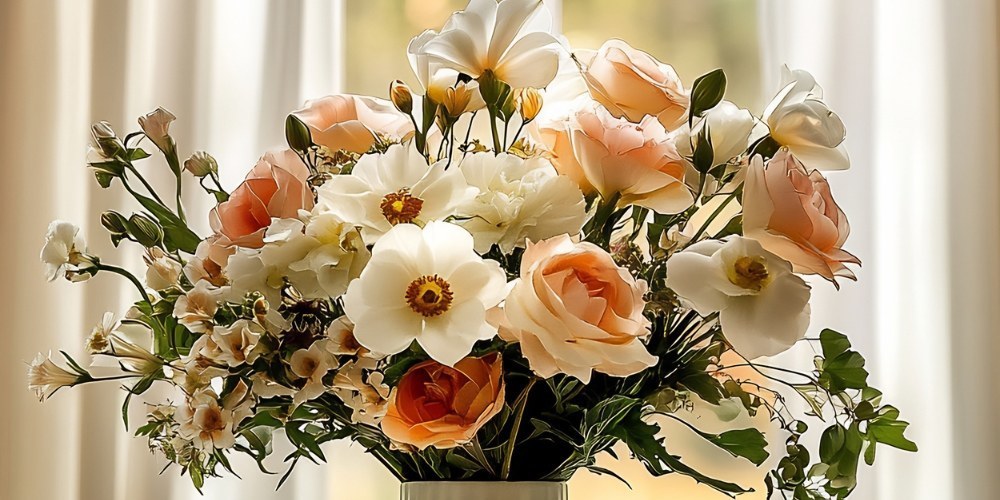
Press your nose into a grocery-store rose. You’ll get a faint green scent, maybe a whisper of sweetness — or nothing at all. Now push your face into a full-blown garden rose, one of those quartered, densely petaled blooms in dusty apricot or pale blush pink. The fragrance hits you like a warm room: layered, complex, almost edible. The petals feel different under your fingers too — thicker, more like fabric than film. You’re holding what looks like the same flower, but it’s a different creature entirely. Understanding why is actually fascinating, and it matters whether you’re growing them, buying them, or choosing an arrangement that genuinely impresses someone.
Short answer: garden roses are old-lineage or heritage-bred roses cultivated specifically for fragrance, petal count, and form — not for shelf life or shipping durability. Standard florist roses (called hybrid tea roses in most of the industry) are bred for long stems, uniform color, and the ability to survive a cold chain from farm to shop. Both are roses. But they are optimized for completely opposite things.
Where the Confusion Comes From
Most people grow up seeing one kind of rose: the long-stemmed hybrid tea. It’s what Valentine’s Day looks like in commercials, what corner shops stock by the dozen, and what the word “rose” conjures for the average buyer. So when garden roses started appearing more widely in florist shops and online arrangements over the past decade, a lot of people assumed they were just a fancier version of the same thing. They’re not. The breeding history, growing requirements, fragrance chemistry, and even the environmental footprint are substantially different.
The term “garden rose” itself covers a broad category — including antique varieties like damasks, centifolias, and gallicas that have been cultivated for centuries, as well as modern hybrid garden roses from breeders like David Austin that deliberately recreate old-rose characteristics. What they share is an emphasis on experience over logistics.
The Science of the Petals
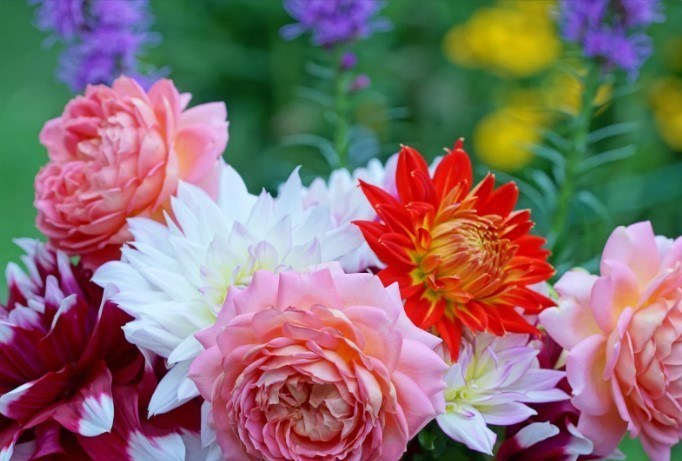
The most visible difference is petal count. A standard hybrid tea rose has roughly 30 to 45 petals arranged in a high-centered spiral — that classic cone shape designed to unfurl dramatically and look photogenic at every stage. A garden rose can have 60 to over 100 petals, packed into a rounded, cupped, or quartered form that opens flat and full like a peony. This isn’t just aesthetic. That density is the result of deliberate breeding for what horticulturalists call “petalage” — the trait of producing multiple layers of petals from a relatively small bloom diameter.
The petal structure also affects how the flower ages. A hybrid tea opens predictably and holds its shape well under refrigeration and handling. A garden rose opens more unpredictably, blooming outward in stages, and tends to have a shorter vase life — typically 5 to 7 days compared to 10 to 14 days for a well-conditioned hybrid tea. For a florist in Aventura or any warm climate, this matters enormously: garden roses are more temperature-sensitive and require careful cold-chain management to arrive in optimal condition.
Fragrance: Why One Smells and One Doesn’t
This is the part that surprises most people most. Standard hybrid tea roses largely lost their scent through 20th-century commercial breeding. Growers selecting for stem length, bloom size, disease resistance, and long vase life were, in effect, selecting against fragrance — because the genes controlling scent expression are linked to traits that reduce commercial performance. The result is a visually beautiful flower that smells like very little.
Garden roses — especially old-rose varieties and David Austin’s modern English roses — retain high concentrations of aromatic compounds: geraniol, linalool, nerol, and damascenone, among others. Damascenone in particular is what gives classic rose perfume its characteristic warmth and depth. A single fully open garden rose can scent a small room. That fragrance is also why rose essential oil and rosewater for skincare are almost always derived from Rosa damascena or similar heritage varieties, not from hybrid teas.
Sustainability and Growing Footprint
Here’s where the eco-friendly angle gets genuinely interesting. The majority of hybrid tea roses sold in the United States are grown in South America — primarily Ecuador and Colombia — under greenhouse conditions that rely heavily on synthetic fertilizers and pesticides, then air-freighted north. The carbon footprint of a standard supermarket rose bouquet is substantial.
Many garden rose cultivars, by contrast, are better suited to domestic growing — including in home gardens and small-scale farm operations. Old rose varieties like rugosas and many gallicas are notably disease-resistant and often require far fewer chemical inputs than hybrid teas. Growing your own garden roses is genuinely feasible for a DIY gardener, and small local growers supplying garden roses to regional florists represent a much shorter, lower-emission supply chain than the conventional long-stem trade.
If sustainability matters to your buying decisions, it’s worth asking your florist specifically about where their garden roses are sourced. Locally grown, seasonally available garden roses carry a meaningfully smaller environmental footprint than imported hybrid teas — and they’ll smell better in your home while they’re at it.
Cost Breakdown: What You’re Actually Paying For
Garden roses cost more, and the reasons are straightforward once you understand what goes into them. Here’s a rough cost comparison for a standard retail purchase in 2026:
- Hybrid tea roses (standard florist roses): $2–$4 per stem at retail; $60–$80 for a dozen-stem arranged bouquet
- Garden roses (David Austin or similar): $5–$9 per stem at retail; $90–$160 for an arranged bouquet depending on variety and season
- Premium or rare garden rose varieties (Juliet, Keira, Patience): $10–$15 per stem, sometimes more for specialty growers
The price gap reflects several real factors: lower per-plant stem yield, shorter vase life requiring faster logistics, more careful handling, and — for the most sought-after varieties — licensing fees paid to breeders. David Austin Roses, for instance, licenses named varieties to growers, and those royalties are built into the wholesale price.
For most DIY flower buyers, the sweet spot is a mixed arrangement: a few premium garden roses as focal flowers combined with standard roses or complementary blooms as supporting material. You get the visual drama and fragrance of garden roses without paying garden-rose prices for every stem. You can browse https://mypeonika.com/collections/garden-roses to see how this works in practice.
Garden Roses vs. Peonies: The Common Mix-Up
The bloom that garden roses are most frequently confused with is the peony — and it’s an understandable mistake. Both feature dense, layered petals, a rounded open form, and a lush, full-blown appearance. But they are entirely different plants from different botanical families. Roses belong to the genus Rosa in the family Rosaceae. Peonies are Paeonia, in the family Paeoniaceae — not even close relatives.
Practically speaking: peonies bloom in a very narrow spring window (typically late April through June in most of the U.S.) and are extremely difficult to grow outside their preferred climate range. Garden roses bloom repeatedly through the growing season and are far more widely available year-round from specialty growers. Fragrance-wise, they’re in the same conversation — both are among the most strongly scented flowers available — but their scent profiles differ. Peonies tend toward fresh, powdery, and slightly sweet. Garden roses read warmer and more complex, with spice and fruit notes depending on variety.
If you want the visual effect of a peony outside of spring, a garden rose like Juliet or Keira is the closest botanical substitute. If you want a garden rose but can only find peonies in season, they’ll behave similarly in arrangements but won’t last quite as long. Both are stunning choices. Both are available through mypeonika.com.
Frequently Asked Questions
Are garden roses harder to grow at home than standard roses?
It depends on the variety. Many old-rose and shrub-rose types — rugosas, gallicas, and some David Austin varieties — are actually easier to grow than hybrid teas because they have better disease resistance and require less spraying. Hybrid teas are notoriously fussy about black spot and mildew. If you’re a DIY gardener, heritage garden rose varieties are often the more forgiving choice.
Why don’t florist roses smell like roses anymore?
Commercial hybrid tea roses were bred over the 20th century primarily for visual traits — stem length, bloom size, color uniformity, and long vase life. Fragrance was not a selection priority, and in practice, the genes for strong scent often traded off against those commercial traits. The result is a visually uniform flower with minimal scent. Garden roses and old-rose varieties retain the aromatic compounds that define classic rose fragrance.
How do I tell a garden rose from a regular rose at a flower shop?
Look at the bloom form. A standard hybrid tea rose has a high-centered, cone-shaped bloom with petals spiraling outward from a tight center. A garden rose is rounder, cupped, or flat-opened with many more petals packed into a softer, more informal shape. The fragrance test also works: if you can smell it clearly from arm’s length, it’s almost certainly a garden rose or a heritage variety.
Do garden roses last as long in a vase?
Generally no. Expect 5 to 7 days for garden roses under good care, versus 10 to 14 days for well-conditioned hybrid teas. Keeping garden roses in clean water, away from direct sunlight and heat sources, and re-cutting stems every two to three days will extend their life. The trade-off is that garden roses are significantly more fragrant and visually lush during their shorter window.
Which varieties of garden roses are most popular in arrangements?
David Austin’s English roses dominate the market for premium arrangements. Juliet (peachy apricot), Keira (soft pink), Patience (blush white), and Constance (deep pink) are among the most requested. For heritage varieties, damask roses and centifolias appear in specialty and seasonal arrangements. Availability varies by season and region, so checking with a local specialty florist is the most reliable way to find what’s currently in stock.
The Real Difference, Plainly Stated
Standard florist roses are engineered for a supply chain. Garden roses are bred for a human experience. One is optimized to survive a long journey and sit in a vase for two weeks; the other is optimized to stop you in your tracks the moment you smell it. Neither is objectively better — they solve different problems. But if you’ve ever felt vaguely disappointed by a rose bouquet that looked beautiful in a photo and delivered almost nothing in person, garden roses are almost certainly the answer to what was missing.